Showing posts with label india. Show all posts

Saturday, 25 October 2014

That awkward moment when you find yourself in the middle of a paddy field.

3 years ago I travelled around south east Asia with my best friend. My exasperated doctors at the time gave me very few warnings besides telling me to eat lots, drink gallons and take as many salt tablets as possible. The one warning I was given was to, at all costs, avoid paddy fields. There's a mould which grows in the fields that can be highly dangerous to cystics and could easily stop me in my tracks and see me and my backpack bundled back on a plane bound for home.

"All around us are paddy fields" was the line that filled me with dread as we started the drive from Goa airport to Palolem in the South. He wasn't lying either, we were surrounded everywhere we went in both north and south Goa. They stretched for miles, there were reservoirs and aqueducts built to keep them boggy, thousands of people spent their days in there neat, swampy rows; and I wasn't meant to be anywhere near them. 


I don't know if it was the paddy fields that did it. It could have been that, or the combination of a lack of aerobic exercise, a slight drop in weight and the smoking habits of our travelling companions. It could have been that the smog of the cities had finally hit my chest and my poor little lungs just didn't want to fight anymore. Either way 10 days before we were due to leave India, my chest decided it didn't want to be there anymore. 

I've been in New Zealand for over a week now and things are improving. I didn't sleep for days, coughed to the point of sickness a number of times, and seriously considered a trip to the docs. It was really quite shit for a week or so, poor Alice didn't sleep either because my coughing kept her up too, and my appetite also suffered. All that said, I am incredibly proud of my broken little body and all it coped with and achieved. 

India was always going to be my biggest hurdle. The heat, the food, the dirt, the lack of excersise, the means of transport and the limited access to treatment; there were many odds stacked against me and my CF. Yes, I've an infection, but I'm fighting it. I worked so hard to make myself fit enough for this trip: the many hours in the gym, the early morning runs, eating and putting on those precious kilos, saving and saving and saving, all so I could come away and experience everything before my insurance company bit me in the arse and stopped me from exploring. 


I loved India. I loved how much it surprised me. I loved how, after a while, nothing did surprise me anymore because anything goes out there. There are so many preconceived ideas about it as a place and whilst I'm not saying it's the safest place to visit, nor am I letting my little sister head there on her own any time soon, everyone we met seemed to, more than anything, be desperate to disprove the stories and the misconceptions, they wanted us to love their country and their people; and we whole-heartedly did.

The air is clear in New Zealand. We are exercising and eating fruit and veg. My chest is improving and getting over the shock of India. Physio, Cipro, nebs and running are a killer combination.


L xx 

Thursday, 23 October 2014

What should women wear when travelling in India?

How women travellers should dress in India is an ongoing discussion. It's the question I've been asked most since I've been out here and the issue that Alice and I struggled most with before we came. So, here's a brief overview in relation to the places we visited.

Before I begin, though, it should be said that how you dress is completely down to you, and what you are comfortable with. At the end of the day you are a travelling woman in India, you are going to get lots of looks from locals (both male and female) and will attract attention by just being there. How you dress will only affect the sort of attention you receive. Alice and I didn't once feel threatened on our trip. Yes, people looked at us, and often we did flash a little more knee/shoulder than is probably encouraged; but we did so under the clear understanding that we were going to generate that kind of reaction and were comfortable with that fact.

North India

Delhi
Delhi is a crazy place. It might be smaller than Mumbai with a smaller population, but it feels that bit more chaotic. To us, it felt dirtier and more intrusive. Make sure you have a shawl with you at all times and I would keep your shoulders and knees covered, just to avoided the attention. You can buy trousers for 100rps in most of the bazaars, so stock up at the beginning of the trip.
If you visit any temples you will have to cover up, but it is worth donning the same garb for any palace or fort visits; people will ask to take photos of you in Delhi.


Varanasi

Varanasi is a holy city, 300 funerals take place here every day. It's hot and humid and intense and you'll sweat more than you ever thought was physically possible, but keep covered up at all times here; just out of respect.

Agra
Being a tourist destination, the Taj Mahal is full of people from every corner of the globe. You could wear anything you liked here, really, so it's up to you whether or not you want to observe the more conservative dress code. We did, because it felt more respectful.


Jaipur
Jaipur is a little more chilled out, so it is at your discretion how much flesh you show. Keep a scarf with you and just be respectful. It is worth noting that a lot of people living in Jaipur aren't as used to westerners than those in the big cities; Jaipur is huge and quite poor in parts, so just be aware that you might attract a lot of attention.

Jaisalmer
I got my shoulders out in Jaisalmer for the first time. It is a small city, and felt that more chilled. We ensured we always had something to cover us up, but were a bit more relaxed on the dress code. Just, as a mentioned, be aware of the level of attention you might attract while you are there. Many of the camel safaris offer village visits; I would recommend keeping covered up for these, just to avoid creating anymore havoc than your presence alone will inevitably cause.

South India

We only visited a very small part of South India, so you may need to look around for advice on how to dress in Kerala, Chennai and beyond.


Goa
Goa is a bit like a beach resort. People walk through the streets in their bikinis here, especially in Palolem. We didn't go that far, but shorts and dresses were fine. Bikinis are all good on the beach, though I would recommend finding a slightly quieter patch of sand and maybe tucking yourselves behind a boat or something similar to avoid drawing a crowd. A lot of people told us to cover up on the local buses, however we found that we didn't draw any additional attention so carried on as we were (keeping a shawl or scarf with us at all times).


Hampi
Hampi is a very sacred place. If you are visiting any of the active temples make sure you cover up; chances are you will be asked to by the tourist information guys if you don't. The rest of the place you are fine; Hampi draws a lot of domestic tourists to it's ruins so just be aware that you might stick out a little bit and get a few looks from other Indians.

Mumbai
Dress according to your activity and location. If you're visiting the slums be respectful and conservative and consider that people aren't that used to scantily clad western women wandering around. In Colaba we felt quite comfortable in dresses with shawls, though we did put trousers on at night. Be aware of the Bollywood talent scouts that patrol the strip outside Leopold's; it is more than likely that you'll be scouted to be extra in an up and coming film if you're a woman and you're western and you're arms or legs are exposed (we were scouted within a minute of getting out of the cab!)


My main advice would be to stick within your comfort zone. Alice and I felt comfortable in Goa wearing summer clothes, but for much of Rajahstan we kept our shoulders and knees covered. Understand that you are already attracting a lot of attention, and what you wear will only add or subtract from that.

L&A x 

Sunday, 19 October 2014

Eating our way around India.

Surviving a month in India without getting Delhi belly is probably one of my greatest achievements. Don't think we did that by just avoiding the cuisine all together though... Here's some of the best things we ate that you should look out for if you're in the country.

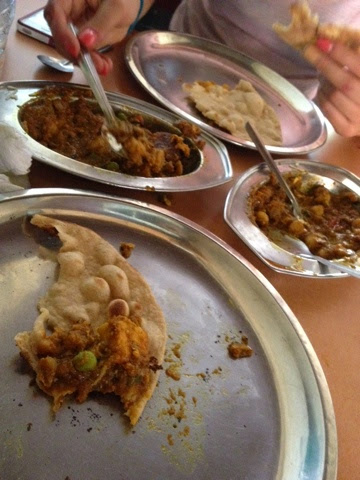
Thali was one of our favourite discoveries, and fast became a staple meal during our time in Rajahstan. Traditionally a South India dish, we actually had our best Thali's up north. Ranging from 70-300rps (depending on how classy the place and whether you opt for the fish, meat or veggie versions), Thalis usually consist of 2 roti, a poppadom and a small serving of steamed rice, these to accompany at least two curries, a Dahl, a portion of curd and occasionally a chutney. Eat with your hands and tuck in. 


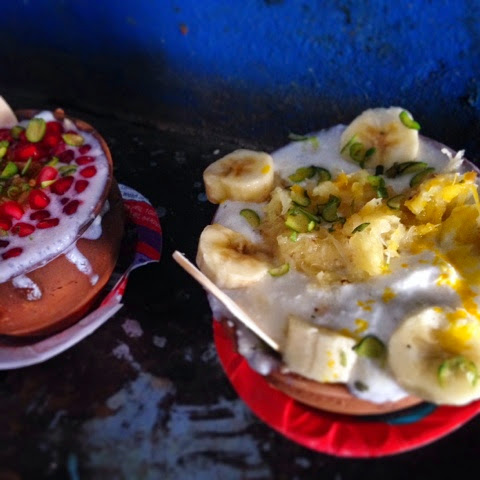
Lassis are curd based drinks that can be served salty, sweet or mixed with fruit. Ranging from 20-120rps depending on the place and the flavour combinations. Mango lassis are a firm favourite in India, but I'd always recommend going with the fruit in season. The best we had were from blue lassis in Varanasi (pictured), which was more like a yogurt than a drink, and Lassiwala in Jaipur which was served plain (sweet) in disposable clay pots. 


It was the recommendation of many to 'go veggie' during our time in India, and although some would argue that that was a shame as it meant we missed out on some foods, it wasn't an issue for us as the vegetarian food is so readily available, so varied and so tasty. We ate veg curries most days; ranging from the simple mix veg to the more adventurous malay kofta (an almond, potato and cauliflower kofta served in a creamy cashew sauce). Paneer is a soft cheese which makes an appearance in almost every veggie dish, and if you're a fan you should definitely try palak paneer (with spinach) and paneer masala. The cashew curries are also great and we has an excellent cashew and pineapple at laughing Buddha in Hampi. Be adventurous, the combinations are great.

A couple of translations:
Palak: spinach
Aloo: potato
Paneer: soft cheese
Gobi: cauliflower 
Mutter: beans
Chana: chickpeas


Chapati/ roti cost between 5-20rps and are eaten with almost every meal. Some have them instead of rice and others have them alongside. The simplest are plain, and are made with water and whole meal flour and cooked without fat making them the healthiest option. Parathas and naan can be stuffed with everything from potato to spinach to cheese and garlic. 

Chai is such an institution in India, and so quickly becomes part of your daily routine, that I almost didn't include it in this list. The sweet, milky spiced tea is served everywhere, and regularly offered a gift from shopkeepers, hoteliers and villagers alike. It's the perfect start to the day, but isn't for those who don't have a sweet tooth. The best we had was in the Shantaram slum in Mumbai for 6p. Amazing. 


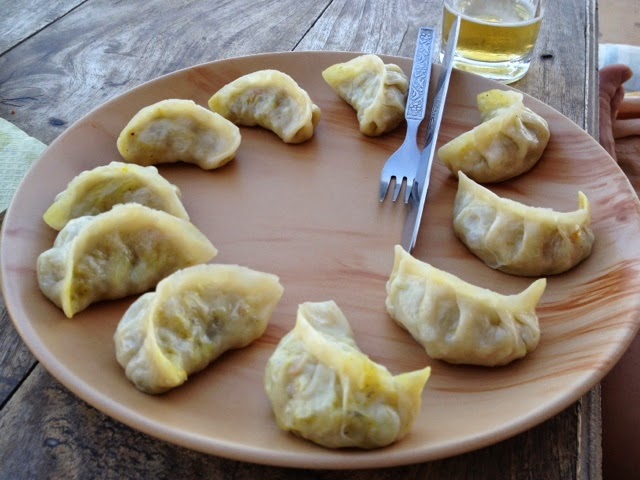
Momos are steamed buns which are very similar to gyoza. I preferred them with less spice as they reminded me of the Japanese snack from home. They're actually Tibetan, and can be filled with vegetables, chicken or fish. 


Shakarkandi are a steamed sweet potato street food that's native to Delhi. It's guilt-free too, which is always nice. Vendors chop the piping hot spuds onto a tapas-sized plate then douse it with lemon juice. It's then sprinkled with chaat masala which is a combo of black pepper, chilli, cumin, dried mango and sugar to name but a few. Only 20rps too. 


Petha is a traditional Indian sweet, native to Agra. It's made from white pumpkin and is similar to Turkish delight. We weren't the biggest fans; the texture was a bit strange. But for 50rps, when in Rome, right? 

Manchurian's are popular across India and can be found on most menus that boast a multi-cuisine offering. Be it chicken, prawn, mushroom or another vegetable, the main ingredient is battered and deep fried then stir fried in a Chinese-style sauce with green peppers. 


Goa is the place to go for fresh seafood. Squid, shark, snapper; prawn, lobster or scallops: you can buy by the kilo, or opt for tandoor. Just keep an eye on the restaurant cleanliness as shellfish in particular is always a little risqué, even more so if you're trying to avoid Delhi belly. 

Bhel puri is a puffed rice street food at its most famous on Chowpatty beach in Mumbai. It's similar to Bombay mix, only 'wetter'. Puffed rice is mixed with peanuts, red onion, chilli, tomato, potato, fresh parsley and spices. Eat with your hands for a healthy (and spicy!) between meal snack. 

Friday, 17 October 2014

3 days in Hampi.

Where to stay?

Unbeknownst to us we arrived in Hampi in time for the Navarti festival season, which is an Indian holiday and therefore saw us join the thousands of tourists (both domestic and backpackers) who had chosen to descend upon the ancient town for the weekend. Almost every hotel  and guesthouse on the bazaar side of the river was full. We'd planned to cross the river and stay on the other side where alcohol is legal, but high tides stopped the boats for crossing. 


We met Will, a lone traveller from Virginia, at the bus station in Paniji and ended up sharing a room at Mayurums homestay for 1,200rps per night. Pricey, but the lowest we could wangle considering the holidays. Ravi, the owner, was more than obliging and the room was actually great, with a large bed, hot shower and good wifi. 

Netra guesthouse, on the edge of the bazaar, has cheap rooms and an awesome rooftop restaurant so that's defintaly worth a look.

On the other side of the river, the laughing Buddha is a hotspot that offers riverside bungalows for those willing to pay a little more.

If you're budgeting, head to sunny's guesthouse or further down the road to Shantis bungalows.

Exploring Hampi.

Day one we explored the town on foot and soaked up the infectious festival atmosphere. Ruins decorate your every line of sight in Hampi, there is no escaping them. Standing tall in the centre of it all is the Virupaksha temple with its intricate carvings and high walls. Cover yourself up if you visit, and expect to pay 20rps entry. Keep an eye out for Lakshmi, the temple elephant, who'll give you a happy slap on the head if you give her a few paper rupees (she wouldn't except coins, clever thing.) Monkeys are everywhere, adding to the 'raiders of the lost ark' feel about the place, and the place is full of people.


On foot you can explore the rock faces that border the town, littered with huge boulders and weathered temple ruins. Scale the stairs to theivandrum temple at the end of the road leading out of Hampi, it's worth it for the view. 


Day two we hired bicycles for 100rps each per day. Scooters are about 200-250rps, however we quite fancied the exercise. The roads are easy to navigate and by going it alone, without a tour guide, you're free to roam and take in as much or as little temple as you like. 


The underground shrine is definitely worth a look, but things do get a little touristy at the main site and you should expect to pay 250rps to enter the elephant stables. My advice? Go it alone, the landscape is unlike anywhere in the world and the surrounding villages are fascinating.


On our second night, the town lit 10,000 candles outside the Virupaksha temple, to mark the start of the Navarati celebrations. 


Family's dressed up in their finest clothes, with the women decorating themselves in highly embellished saris with bells round their ankles and flowers in their hair, and the men wearing crisp new Sherwani. We were honoured to be asked to get involved, and it was amazing standing amongst the candles and watching the procession, led by Lakshmi. 


Day three, the river crossing re-opened. The boat costs between 30-50rps (depending on the boatman...), and takes a matter of minutes. The other side is a little more chilled than the bazaar, alcohol is legal there and Bhang is readily available. We hired cycles again (50rps for the day) and went in search of the nearby lake. It's beautiful, and although the ride nearly killed us (over 5km, uphill, in the midday sun) it was worth the sweatfest.


Ignore the signs warning about crocodiles, they were put up to stop people swimming after a number of incidents in the dam. 


The water's safe and deep, too, making it perfect for cliff jumping. 

Star attraction...

Just be aware that you may quickly become the star attraction as word spreads around the nearby villages that westerners are jumping. There were about 20 pubescent males stood on the cliffs taking pictures by the time we took the plunge. 

We didn't get a chance to visit, but the monkey temple was highly recommended to us as a great place to view sunset on the other side of the river. 

Where to eat?

Netra guesthouse on the bazaar side is a backpackers hub, and serves great food at a reasonable price. The salads we're stand-out, with the 'funky monkey veggie salad' being my recommendation and a steal at 180rps. Breakfast is also good here, and the lazy bar layout makes it a great place to wile away the hours. You can get booze here too, despite the ban, just ask for the 'special' drinks. 

Netra restaurant 

Ravi rose will also get you beers, however you'll pay 250rps per can which is really quite expensive. Bhang lassis can also be bought at this rooftop, lazy restaurant. The food was tasty, with Thalis on offer and great stuffed partharas.

On the other side of the river, laughing Buddha is the place to be. Service is very slow, but drinks are readily available, the menu is vast, and the view is great. 

Chilling at the Laughing Buddha

And the rest...

We got massages at the Lotus salon, adjacent to Gantapi restaurant. A full hour, full body Ayurvedic, cost 600rps per person and was literally the best thing ever after a 12hour sleeper bus. 

Yoga classes are on offer at Gopi's guesthouse for 150rps each. 

I loved hampi and could have stayed for days. 3 is enough to see the place, but people linger here and it's clear to see why. You can just keep exploring.

L&A x 


Tuesday, 14 October 2014

20 things you can buy for 50p in India.

The humble 50p. In the UK it'll buy you 2 Freddo's if you're lucky and perhaps a prawn cocktail sandwich in the reduced to clear. In India, it'll stretch just that little bit further... Here's some examples to name but a few.

1. 2 hot glasses of sweet, milky masala chai. 

2. A shot of Blue Riband gin.


3. 2 bottles of drinking water (make sure you always check the seal, and if they say 'normal' water they mean 'warm', so specify you want the cold stuff.) 

4. A small kingfisher (or a large one if you're lucky.)


5. A pack of postcards from child sellers outside just about every temple, fort, palace or general tourist attraction in Rajahstan. 

6. 2 packets of Spanish Tango Tomato crisps which we've found taste exactly like prawn cocktail and are the best train/ bus/ boat snack ever.


7. A large lassi at either Lassiwala, Jaipur or blue lassi in Varanasi. They were the best we tried all trip. 


8. 6 cups of coffee at the Indian Cafe, Jaipur.

9. Half a day's bicycle hire in Hampi.


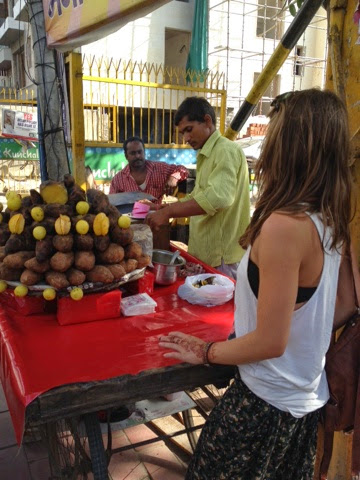
10. 5 glasses of sugarcane juice, squeezed in front of you on most shop corners in Mumbai.


11. 2 adapter plugs in Varanasi.

12. 5 wraps of still-hot bhel puri, mixed in front of you in a silver urn and spiced to your liking. 


13. 3-5 hot roti/ chapati, from just about every restaurant you'll ever visit in India. 

14. A bounty (or twix, or snickers, or if you're lucky a 4-fingered kit kat.) 

15. Tiger balm.

16. Jewellery: wooden earrings and rings, plaited bracelets, silver anklets you name it. 

17. A pot of nail varnish (just about any brand you can think of.)

18. A mudbath in Arambool.


19. A ride around Colaba in Mumbai, in a traditional Mumbai taxi. 

20. 5 'kisses' from Laxmi  the elephant at the Virupaksha Temple in Hampi. 


Saturday, 11 October 2014

Travelling in India: things you need to know.

1. You can't change rupees before you enter India, and you won't be able to change them back once you've left the country. Make sure you either change back before exiting, or spend all you have in the bazaars before boarding the plane. 


2. Alcohol tax is a killer in some areas of India. In Delhi it is around 20%, and more often than not they'll add this to your bill at the end. Goa has the cheapest tax (if any at all). Make sure you either check the menu or ask the waiter before going completely mad on the 90rps G&Ts. 


3. Bhang is marujuna. (It's worth knowing before you order a few Bhang lassis 'because you're feeling crazy and want to try something new and authentic.')

4. Alcohol on trains is prohibited, or at least frowned upon. If you're planning to speed up the journey with a £1.50 bottle of rum, keep it concealed and be subtle. 

5. Tuc tuc drivers don't like to use the meter, because journeys would be much cheaper if they did. Most of them unplug it and then claim it's broken. It is worth asking though, and will at the very least show you mean business in terms of bartering the fare. 


6. Chai is a huge deal out here, and you're offered it almost everywhere. Accept it, because it's a gift and some consider it rude if you don't. 

6b. For almost everything else, you'll be expected to leave a tip.

7. If you're visiting villages it's worth taking some small presents to give away: school pens, sweets etc. The kids will ask and it's always hard to say no. 


8. The cows out here are considered holy and have the right of way. We saw one sat in a silver shop in Varanasi and no one even thought to ask it to move. 


9. Those of paler skin will often find themselves a bit of an attraction, with Indians asking to take a photo with them. It's your call if you agree, just anticipate that if you say yes to one, it's likely you'll end up running a weird photoshoot outside a temple or a fort or somewhere.


10. Foreigners are charged at least twice the entrance fee of Indians at most attractions and monuments. If you're carrying a camera you may be charged even more than that. The Taj Mahal is 750rps entry for foreigners, whilst Indians pay just 25rps.  

11. I'm not even going to start on how horrendous some of the toilets are out here. Just make sure you've got loo roll and hand sanitiser with you all, the, time. 


Thursday, 9 October 2014

Visiting Palolem off-season...

...is such a tease.

The beautiful beach is dotted with tourists, but only so many that you can still find a secluded spot that makes you feel like you're in your own little part of paradise. The bars and restaurants that line the seafront are starting open up, offering cheap local booze, the freshest of seafood and incredible views of the ocean. 

Not a bad view for our morning run.

The touristy shops that line the path down to the beach are fully stocked, and the hawkers are keen to sell you their wares to ensure some low-season sales. But, it's quiet. A little too quiet. The famed beach shake are starting to pop up along the shore, but most are under construction, and many of the bars are only just opening their doors. The nightlife is quiet, with 24hr cocktails available but the only real revellers being large groups of Israeli travellers or couples enjoying some alone time by the sea. 
This place is pregnant with possibility and we left after 2 nights vowing to return once it has started to get into the swing of things.
Not that we didn't keep ourselves 'busy'.

Fernandes was our favourite beach bar. Drinks were cheap (90rps g&t), whilst the seafood was crazy affordable and purchased fresh from the buckets bought in by the fishermen every evening. 


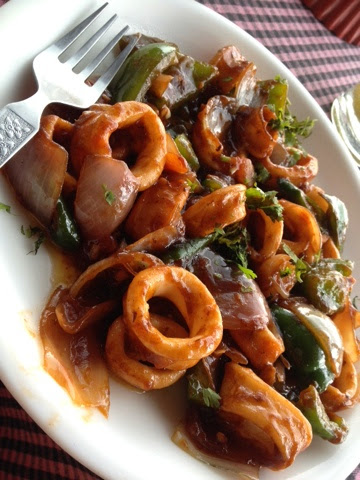
Fresh squid for 80p was a highlight, as was the stuffed mackerel (180rps). 


For the best coffee in town, visit Cafe Express on the corner of the mainstreet. You'll pay a pound a cup but it's worth it. 


The iced shakes are amazing too (better with vodka) and the menu is vast; catering to everyone with Tibetan momos, Israeli hummus wraps and large Thali to share. The staff are lovely too, and you can tell by the excellent music choice that this place goes off peak-season. 

We stayed at Printnams bungalows for 800rps a night. I thought it was quite pricey for what it was out of season, but there were several travellers staying there so we stuck around for the company. Clean room, good sized bed with mosquito net and a hot shower, wifi in the most places; it did the job. 

Friends stayed in Geuros and felt it had more of a travellers vibe. Far cheaper too at 300rps a night; so that's worth checking out. 

We ate at Baba's little Italy, which is one of the many restaurants offering pay-per-kilo seafood on the Main Street. Our kingfish tandoori was great, as was the vegetable sizzler which came out of the kitchen still smoking, served on a hot stone. It was pricey though, topping 500rps for the two of us. 


Goa is beautiful. It's lush green landscape and picturesque beaches make it a place to linger, and explore. 


We'll return next week to take it all in, but for now we head to Hampi on an overnight bus a little browner than when we arrived and excited for the sun-soaked days ahead.
L&A xx